November’s Tip
Bendology Revisited: A Tribute to Dr. Tom Mulligan — Three
Bends I Still Use Every Day (Part I of III) Tip-Back Bend – Upper and Lower
From Dr. Binu Abraham
November 2026
Bendology Revisited: A Tribute to Dr. Tom Mulligan — Three
Bends I Still Use Every Day
Dr. Binu T. Abraham
Adjunct Faculty, Anoor Dental College, Kerala
Kerala Dental Clinic, Aluva, Kerala, India
This article is a tribute to my teacher, Dr. Tom Mulligan, whose approach to orthodontic biomechanics has had a lasting influence on my clinical practice.
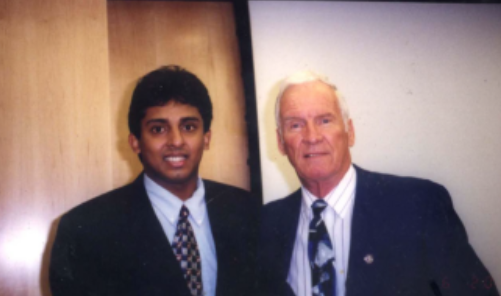
In 1998, as a young postgraduate student, I had the privilege of attending Dr. Mulligan’s (fig:1) Common Sense Mechanics course. The principles he taught during those two days have remained an integral part of my orthodontic practice in Kerala for nearly three decades.
For me, orthodontics is not merely about brackets and archwires—it is fundamentally about biomechanics and bends. Dr. Mulligan taught us that wire bends should not simply be viewed as compensations for treatment errors; rather, they can be an integral part of the treatment mechanics itself.
Among the many principles I learned from him, three bends remain particularly relevant in my daily clinical practice, even while using contemporary pre-adjusted systems such as the MBT prescription.
Article Part I: Tip-Back Bend – Upper and Lower
Dr. Mulligan frequently emphasized the importance of protecting anchorage before it becomes compromised.
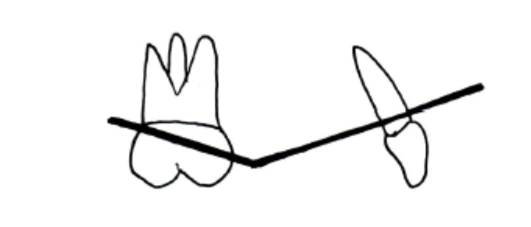
A 15–20° tip-back bend, placed mesial to the molar tube, remains one of my first considerations when preparing anchorage. The bend helps to upright the molar, minimizes undesirable mesial tipping, and provides additional anchorage control without necessarily requiring skeletal anchorage devices such as temporary anchorage devices (TADs).
I routinely consider this principle in both the maxillary and mandibular arches, depending on the biomechanical requirements of the case.
The underlying principle is simple: anchorage should be prepared proactively rather than managed only after anchorage loss has occurred.